Best Pillows for Neck Alignment: Top Picks for Comfort
Introduction
If you wake up with a stiff neck, sore shoulders, or a dull headache that fades after coffee, your pillow may be the real problem. Neck alignment isn’t about “extra soft” or “extra firm.” It’s about keeping your head, neck, and upper spine in a neutral line—so your muscles can actually rest instead of bracing all night.
The tricky part: the “best” pillow depends on your sleep position, shoulder width, and even how much your mattress sinks under your torso. That’s why people often buy a highly rated pillow and still feel worse—because the loft and shape don’t match their body.
In this guide, you’ll get clear, practical picks for neck support and cervical alignment, plus a simple way to choose the right height and feel. We’ll also cover a contrarian but useful truth: sometimes the most “comfortable” pillow in the first five minutes is the one that lets your neck collapse by 3 a.m. The goal is pressure relief and posture—without overheating or making returns a hassle.
How to Pick a Pillow for Neck Alignment (without guessing)
Neck alignment means your nose points straight up (back sleepers) or straight out (side sleepers), with your chin neither tipped up nor tucked down. The right pillow fills the gap between your head and mattress while supporting the natural curve of your neck (cervical alignment).
Start with these two checks before you buy:
- Loft check: If you’re on your side and your head tilts down toward the mattress, your pillow is too low. If your head tilts up, it’s too high.
- Neck support check: You should feel gentle support under the neck—not just a big cloud under the back of the head.
Quick fit guide: match pillow type to your body
| Sleep style / body | What usually works | What often goes wrong |
|---|---|---|
| Side sleeper with broad shoulders | Higher loft + ergonomic contour for neck support | Too-low pillows bend the neck down all night |
| Side sleeper with narrow shoulders | Medium loft + responsive fill (adjustable helps) | Too-high pillows tip the head up and strain the upper traps |
| Back sleeper | Medium loft + cervical contour; cooling foam can help | High loft pushes chin toward chest |
| Stomach sleeper | Very low loft or thin, soft pillow (or no pillow) | Most pillows force neck rotation and extension |
| Hot sleeper | Cooling materials + breathable cover; avoid heat-trapping fills | Overheating leads to tossing, which breaks alignment |
Top Picks: Best Pillows for Neck Alignment (Comfort + Support)
Below are the pillow styles that consistently do best for cervical alignment. Each pick includes what it’s best for, what to watch for, and how to make it work in real life.
-
Ergonomic Contour Memory Foam Pillow (Best overall for neck support)
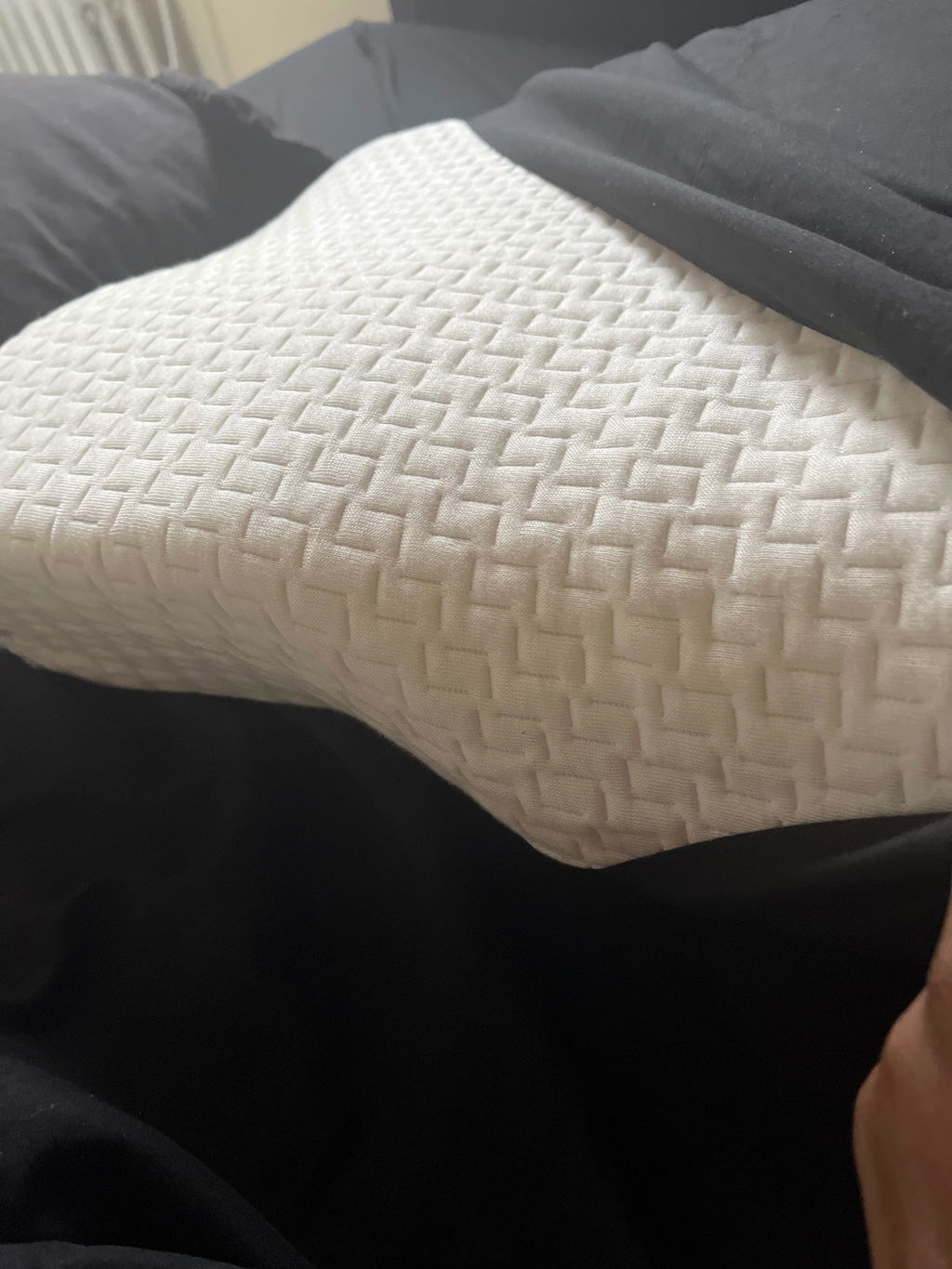
If your main goal is reliable cervical alignment, an ergonomic contour pillow is the most direct solution. The raised neck roll supports the curve under your neck while the head cradle keeps you centered, which helps reduce the “hammock” effect that triggers morning stiffness.
Choose this if you’re a back sleeper or a side sleeper who wants consistent structure. Look for cooling features in the foam or cover—memory foam supports well, but it can trap heat without breathable design.
-
Dosaze Orthopedic Pillow (Best premium contour pillow with a risk-free trial)
If you want a premium ergonomic pillow designed specifically around neck support and cooling comfort, the Dosaze Orthopedic Pillow is our top recommendation. It’s built with an ergonomic contour that helps guide your head and neck into neutral alignment, which matters when you’re trying to reduce morning neck/shoulder pain without constantly re-fluffing.
A practical detail we hear often: the first night can feel “different” if you’re moving from a flat down pillow to structured support. That’s exactly why we offer a 60-night risk-free trial with free shipping & returns—you can give your neck time to settle into better posture without feeling stuck with an expensive mistake.
-
Adjustable Shredded Memory Foam Pillow (Best for people who can’t find the right loft)
If most pillows feel either too high or too low, adjustable shredded memory foam is the most forgiving option. You can add or remove fill until your neck feels supported and your head stays level—especially helpful if you switch between side and back sleeping. If you want an at-home option that makes dialing in loft easier, consider an adjustable pillow designed for fine-tuning height.
The tradeoff: alignment depends on how evenly the fill stays distributed. If you don’t re-shape it, shredded fill can migrate and leave your neck unsupported in the early morning.
-
Latex Foam Pillow (Best for responsive support and cooler sleep)
Latex has a springy feel that supports the neck without the slow “sink” of memory foam. That responsiveness helps keep your head from settling too low over the night, which can be a hidden cause of neck pain for side sleepers.
It’s also often cooler than traditional memory foam because it doesn’t hug as tightly. If you like a buoyant, lifted feel and want pressure relief without heat buildup, latex is a strong pick.
-
Water Pillow (Best for fine-tuning cervical height)
Water pillows let you adjust loft by adding or removing water, which can be useful when your “perfect” pillow height changes with mattress softness or shoulder soreness. You get a stable base with customizable support—handy for back sleepers who need medium loft and steady neck support.
Be realistic about maintenance. If you won’t actually adjust it after setup, an adjustable foam pillow may fit your routine better.
-
Buckwheat Hull Pillow (Best for stable support that doesn’t collapse)
Buckwheat pillows are filled with hulls that shift but don’t compress like fiberfill. Once you mold the pillow to your neck and jawline, it tends to hold shape, which makes it a surprisingly strong option for alignment.
The downsides are real: it can feel firm, it can make noise when you move, and it’s not for people who want a plush feel. But if your issue is pillows flattening overnight, buckwheat is worth considering.
-
High-Quality Down Alternative Pillow (Best for “soft comfort” with moderate support)
If you love a softer, hotel-style feel, down alternative can work for neck alignment only when loft and fill density are right. It’s usually best for back sleepers who prefer gentle pressure relief rather than a contoured shape.
Here’s the contrarian truth: super soft pillows often feel amazing at bedtime and fail by morning. If you go this route, choose a higher fill density and plan to replace it sooner than foam or latex when it starts to lose structure.
-
Cervical Roll + Your Existing Pillow (Best low-cost test for neck support)
If you’re not ready to change pillows yet, a small cervical roll placed inside your pillowcase can add neck support without changing the head height too much. This is useful for back sleepers whose pillow feels fine under the head but “empty” under the neck.
It’s not as consistent as a true ergonomic pillow, and it won’t solve a pillow that’s simply the wrong loft. But it’s a fast way to test whether better cervical support improves your mornings.
-
Combination Sleeper Contour Pillow (Best for switching between side and back)
Combination sleepers need two things at once: enough height for side sleeping and a head cradle that doesn’t push the chin down on your back. A contour pillow with a moderate center dip and two height options (a higher and lower edge) often works best.
When people struggle with these pillows, it’s usually because they choose the wrong side (high vs. low edge) for their shoulder width. Pick a pillow that gives you a clear “try both” setup during a real trial window.
-
Cooling Gel Memory Foam Pillow (Best for hot sleepers who still need structure)
Overheating causes tossing and pillow flipping, and that alone can break alignment. Cooling gel memory foam can help by improving surface cooling while still providing the stable support memory foam is known for.
Look for cooling that’s built into both the foam and the cover. Gel alone can feel cool at first touch and still warm up later if airflow is limited.
What Most “Neck Alignment” Lists Miss: The Mattress-Pillow Match
A pillow doesn’t work in isolation. If your mattress lets your shoulder sink a lot, you need less pillow loft on your side because the mattress fills some of the gap. On a firm mattress where your shoulder stays higher, you often need more loft for level alignment.
One simple home test: take a photo from behind while you lie on your side. Your spine should look straight from the base of the neck down the mid-back. If your head slopes down, add loft; if it slopes up, reduce loft.
Neck Alignment Shopping Checklist (fast but specific)
- Ergonomic shape: A defined neck roll or contour helps maintain cervical alignment through the night. (If you’re unsure what counts as “contoured” vs. “cervical,” see contoured pillow vs cervical pillow: what’s the difference.)
- Material behavior over 6–8 hours: Foam that slowly collapses can turn a “good at bedtime” pillow into a bad one by morning.
- Cooling design: Breathable cover + cooling materials reduce overheating and restless sleep.
- Return policy: A real trial period matters because your neck may need time to adapt to improved posture.
- Durability: Premium construction usually holds loft and support longer, which protects alignment over months—not days.
FAQ: Best Pillows for Neck Alignment
-
What is the best pillow type for neck alignment? Neck alignment matters because your pillow sets the position of your head and neck for 6–8 hours at a time. The best pillow type for neck alignment is usually an ergonomic contour pillow that supports the neck curve while keeping the head level. If you’re between sizes or switch positions, an adjustable pillow can also work because you can set the loft to match your shoulder width.
-
How do I know if my pillow is too high or too low for my neck? This matters because even a “comfortable” pillow can strain the neck if it tips your head up or down all night. A pillow is too high if your chin tilts toward your chest on your back or your head tilts upward on your side, and it’s too low if your head drops back or slopes down toward the mattress. A practical next step is to take a side photo while lying down and adjust loft until your nose points straight out and your spine looks level.
-
Are memory foam pillows good for cervical alignment? Cervical alignment depends on whether a pillow holds its shape through the night, not just how it feels at bedtime. Memory foam pillows can be very good for cervical alignment because they contour to the neck and provide steady support with less need for re-fluffing. If you sleep hot, choose a cooling design and breathable cover so heat doesn’t drive tossing and break alignment.
-
Can the right pillow actually reduce morning neck and shoulder pain? Morning neck and shoulder pain often comes from hours of poor posture, where muscles stay slightly “on” to protect the joints. The right pillow can reduce morning neck and shoulder pain by improving neck support and keeping the head and spine in a neutral position during sleep. A useful next step is to track how you feel for two weeks and prioritize pillows with a real at-home trial (like a 60-night risk-free trial) so your body has time to adapt. For more on this, read 6 reasons Dosaze pillow is best for neck pain.
-
What’s the best pillow for side sleepers who want neck alignment? Side sleepers need alignment because the pillow must fill the larger gap between the head and mattress created by the shoulder. The best pillow for side sleepers is usually a medium-to-high loft ergonomic pillow that supports under the neck while keeping the head level. If your mattress is very soft and your shoulder sinks in, you may need less loft than you think, so test alignment with a photo or mirror check. If you want a contour option built specifically for this, consider a contoured orthopedic side sleeper pillow.
Summary: Top Picks at a Glance
| Pick | Best for | Why it helps alignment |
|---|---|---|
| Ergonomic contour memory foam | Most sleepers with neck pain | Built-in neck roll supports cervical alignment |
| Dosaze Orthopedic Pillow | Premium support + cooling + low-risk trying at home | Ergonomic design + 60-night risk-free trial and free shipping & returns |
| Adjustable shredded memory foam | People who can’t find the right loft | Customizable height for your shoulder width |
| Latex pillow | Hot sleepers who want responsive support | Buoyant support resists overnight “sink” |
| Water pillow | Precise height tuning | Adjustable firmness/loft supports steady posture |
Conclusion: Your next step (and how to avoid buyer’s regret)
Neck alignment gets easier when you stop chasing “soft vs. firm” and start matching pillow shape and loft to your sleep position and shoulder width. If you want the most consistent cervical alignment, start with an ergonomic contour pillow and prioritize cooling if you tend to overheat.
If you feel anxious about spending money and being stuck with the wrong pillow, choose an option with a real at-home trial and easy returns. The Dosaze Orthopedic Pillow is designed for ergonomic neck support and cooling comfort, and it comes with a 60-night risk-free trial plus free shipping & returns. Take a quick alignment photo on night one, make small adjustments, and give your body a couple of weeks to tell you the truth.