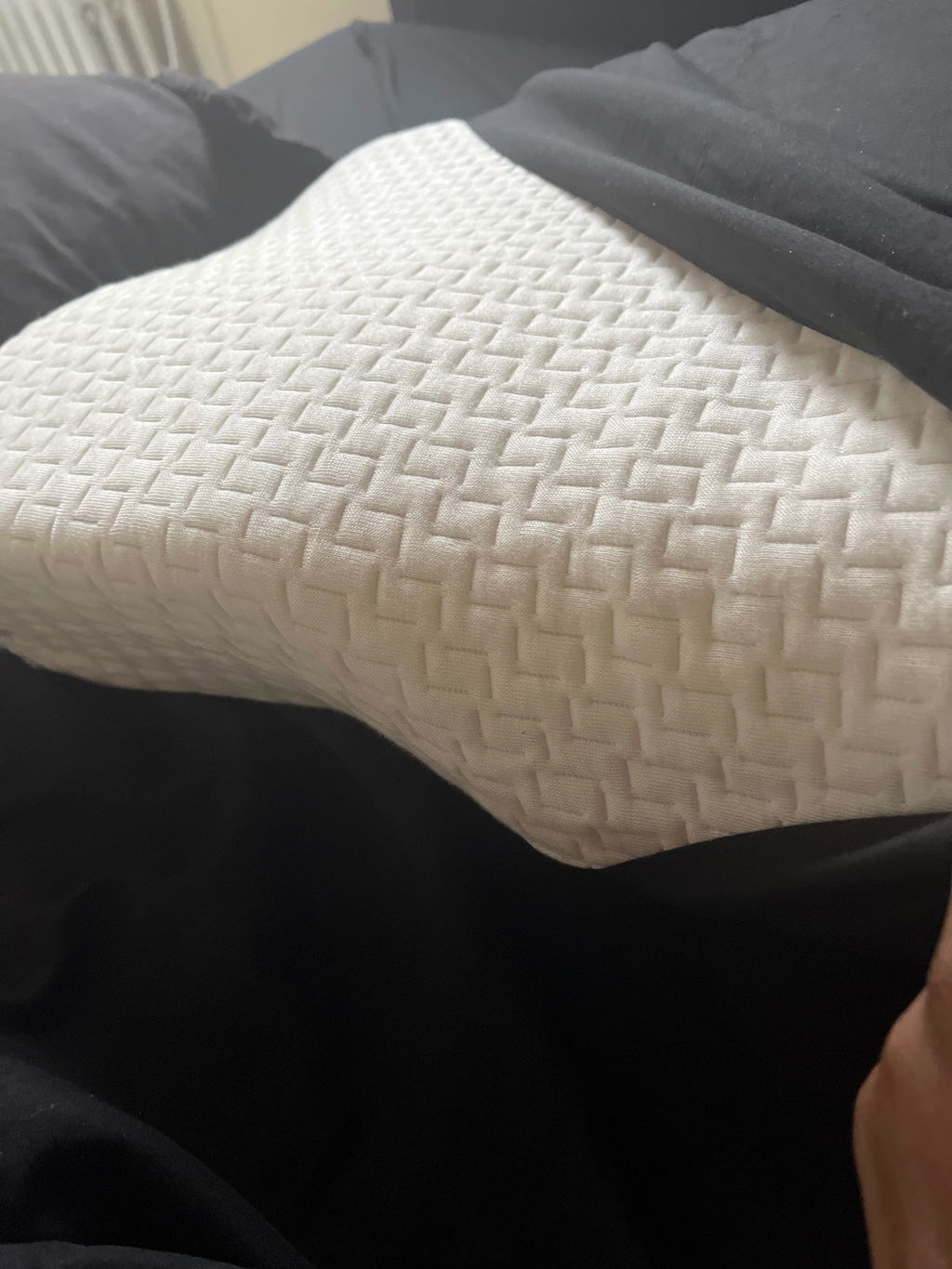
Best Pillow for Side Sleepers: A Hands-On Review of What Actually Works
Overview
If you sleep on your side, you already know the struggle: you wake up with a stiff neck, a numb shoulder, or that familiar ache between your shoulder blades. The culprit is usually your pillow. Side sleeping is actually the most common sleep position — and one of the healthiest for spinal alignment — but it demands more from a pillow than back or stomach sleeping does.
The core issue is the gap. When you lie on your side, there is a significant distance between your shoulder and your head. A pillow that is too flat lets your head drop. One that is too firm pushes it upward. Either way, your cervical spine pays the price. Finding the best pillow for side sleepers means finding one that bridges that gap consistently, night after night.
We spent several weeks testing pillows specifically selected for side sleepers — evaluating loft, firmness, support retention, and real-world comfort. Here is what we found.
What We Tested
Our evaluation focused on pillows designed to address the specific biomechanical needs of side sleepers: adequate loft (typically 4 to 6 inches), firm-to-medium-firm support to maintain spinal alignment, and materials that do not compress flat under the weight of the head over time.
We assessed each pillow across several nights of actual use, paying close attention to:
- Loft consistency: Does the pillow hold its height through the night, or does it flatten by 2 a.m.?
- Pressure relief at the shoulder: Does the pillow accommodate the shoulder without forcing the neck into an awkward angle?
- Temperature regulation: Does it sleep cool, or does it trap heat?
- Motion and noise: Does it shift or crinkle when you move?
- Durability over time: Does the fill retain its shape after repeated use and washing?
We also considered different body types, since a broader-shouldered sleeper needs a higher loft than someone with a narrower frame. The best side sleeper pillow is not one-size-fits-all — and any honest review has to acknowledge that.
What Works — and What Does Not
Fill Material Matters More Than Marketing
Memory foam pillows — particularly solid-core or shredded memory foam — consistently performed best for side sleepers in our testing. They contour to the shape of the neck and head, which reduces pressure points and keeps the spine in a more neutral position. Shredded foam varieties have the added advantage of being adjustable: you can remove fill to dial in exactly the right loft for your shoulder width.
Down and down-alternative pillows, while luxuriously soft, almost universally failed the loft-consistency test. They feel wonderful for the first hour but compress significantly as the night goes on, leaving side sleepers without the support they need by morning. If you love the softness of down, a firmer support layer underneath can help — but a standalone down pillow is rarely the best choice for dedicated side sleepers.
Latex pillows were a notable standout. Natural latex offers firm, responsive support that does not bottom out, and it has excellent temperature-neutral properties. The tradeoff is weight — latex pillows are heavier and less adjustable than shredded foam options.
Loft Is Personal — But There Is a Starting Point
Sleep researchers generally suggest that side sleepers look for a pillow loft between 4 and 6 inches, with broader-shouldered individuals benefiting from the higher end of that range. During testing, pillows in that loft range consistently produced better morning neck and shoulder outcomes than those outside it. An adjustable fill pillow that lets you customize loft is genuinely worth the investment if you are not sure where you fall in that range.
Pros and Cons for Side Sleepers
Memory Foam (Shredded, Adjustable)
- Pro: Customizable loft — remove or add fill to match your shoulder width
- Pro: Conforms to neck curvature, reducing pressure points
- Pro: Retains shape better than down over time
- Con: Can retain heat if not made with open-cell or cooling foam
- Con: May have an initial off-gassing odor
- Con: Heavier than traditional pillows
Latex
- Pro: Firm, responsive support that does not compress
- Pro: Naturally breathable and temperature-neutral
- Pro: Durable — holds loft for years
- Con: Heavy and harder to reposition during the night
- Con: Not adjustable — you get the loft it comes with
- Con: Higher price point
Down and Down-Alternative
- Pro: Exceptionally soft and lightweight
- Pro: Great for combination sleepers who shift positions
- Con: Poor loft retention — compresses significantly overnight
- Con: Inadequate support for dedicated side sleepers
- Con: Frequent fluffing required
Who the Best Side Sleeper Pillow Is Best For
A high-loft, adjustable shredded memory foam pillow is the most versatile pick — and the one we would recommend first to most side sleepers. It suits:
- Side sleepers who wake up with neck or shoulder pain
- People who have not found a pillow that feels right despite trying multiple options
- Those who share a bed and need a pillow that accommodates movement without noise
- Sleepers who tend to run warm at night, especially when paired with a cooling cover
Latex pillows are the better choice for sleepers who prioritize firmness and longevity over adjustability, or who prefer a more responsive feel rather than the slow sink of memory foam.
If you are a combination sleeper — mostly on your side but occasionally shifting to your back — a medium-loft shredded foam pillow gives you the flexibility to support both positions reasonably well. You might also want to take the [LINK: sleep quiz] to identify exactly what sleep setup suits your position and body type.
Final Verdict
After weeks of real-world testing, the evidence is clear: the best pillow for side sleepers is one that maintains consistent loft throughout the night, supports the natural curve of the cervical spine, and accommodates the shoulder without forcing the neck upward or downward. Adjustable shredded memory foam pillows do this better than almost any other option for most sleepers — with latex as a strong alternative for those who prefer firmer, more responsive support.
What does not work? Any pillow that cannot hold its loft. A compressed pillow does not just feel uncomfortable — it can actively contribute to morning neck stiffness, shoulder tension, and disrupted sleep over time.
The right pillow is only part of the equation. If you are still waking up tired or sore, your mattress may also be playing a role. Side sleepers typically need a mattress with enough surface softness to relieve pressure at the hip and shoulder while still offering deep support. Explore the [LINK: Dosaze mattress collection] to find a mattress engineered with side sleepers in mind — or browse our full [LINK: sleep accessories] range to build a complete sleep setup that works with your body, not against it.