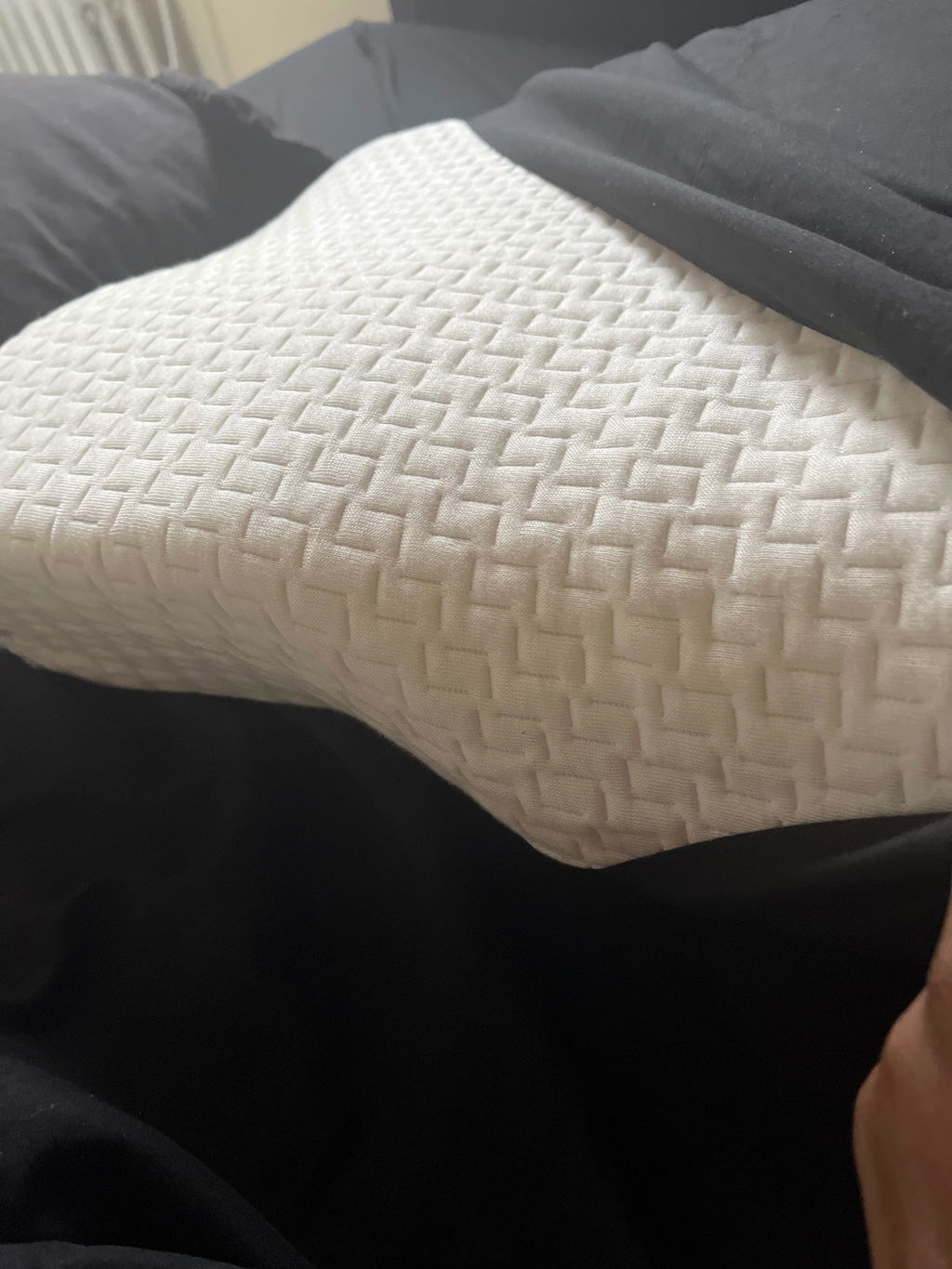
Why your arm falls asleep when side sleeping, and what pillow changes actually help
TL;DR: If your arm falls asleep when side sleeping, the usual cause is pressure and awkward angles at the shoulder, chest, or neck that compress nerves and blood flow. Dosaze focuses on ergonomic pillow shape for better cervical alignment and neck support, plus cooling comfort, so you can stop loading your shoulder and stop cranking your neck. A few fit tweaks, plus a 60-night risk-free trial with free shipping & returns, make it easier to test what actually changes your night.
What that numb, tingling arm usually means
When an arm "falls asleep," you are feeling temporary numbness or tingling from pressure. Side sleeping can load body weight into the shoulder, pinch soft tissue, or bend the wrist and elbow into tight angles for too long.
The pillow matters because it sets the height and angle of your head and neck. If the pillow is too tall or too flat, your neck shifts out of neutral, and your shoulder often takes the hit as your body searches for a "stable" position.
The most common side-sleeping positions that make an arm go numb
You do not need a diagnosis to make progress. You need to spot which pattern you repeat and change the part that is creating pressure.
Pattern 1: Shoulder rolled forward under your chest
If your top shoulder drifts forward and your chest rotates toward the mattress, you can compress the nerves and vessels that run between your collarbone and first rib. This is a common "half-stomach" side sleep.
Pillow fit plays a role because a poorly supported neck makes you twist through your upper back. That twist often ends with the shoulder jammed forward.
Pattern 2: Your head is tilted down into the mattress
A pillow that is too low lets your head drop. You may then hike the shoulder up to "meet" your head, which loads the side of the shoulder and narrows the space where nerves pass.
This is one of the most common reasons people wake up with shoulder numbness and neck tightness at the same time.
Pattern 3: Your pillow is too high, so your neck bends up
A pillow that is too tall can push your head up, tipping your neck sideways. Your body often responds by reaching an arm overhead, tucking a hand under your pillow, or curling the wrist, all of which can cause numbness.
In this pattern, "more pillow" usually makes the problem worse, even if it feels plush at first.
Pattern 4: Bottom arm trapped under your body
If you sleep with your bottom arm under your torso or under the pillow, you can compress nerves in the arm and shoulder. It can also bend the wrist and elbow in ways that go numb fast.
The fix is often a simpler setup: keep the bottom arm forward, not under you, and use pillow height that lets your head stay level without needing your arm as extra support.
Should your shoulder be on the pillow or the mattress?
For most side sleepers, your shoulder should stay on the mattress, not on the pillow. The pillow supports your head and neck, while the mattress supports the shoulder.
Here is the practical cue: when you lie on your side, slide your pillow up until it fills the space between your neck and the pillow edge without pushing under your shoulder. If the pillow creeps under the shoulder, it often lifts the shoulder, crowds the neck, and increases pressure.
If you want a deeper walkthrough focused on numbness, this Dosaze guide is a good companion: Why Your Shoulder Goes Numb When You Sleep on Your Side, and What Pillow Fit to Try Next.
Where to start tonight, two quick changes
Try these in order. Each one takes under a minute, and you will know quickly if it reduces pressure.
- Pull the bottom shoulder slightly down and back before you settle. Think "broad collarbones," not "shrug." This creates more space at the front of the shoulder.
- Put your bottom arm forward, like you are holding a small pillow. This prevents you from pinning it under your ribs and keeps the wrist straighter.
If those help but do not fully solve it, your pillow height and shape are usually the next lever.
What pillow changes actually help for side-sleeper numbness
A good side-sleeper pillow does not just feel soft. It holds your head at a height that keeps your neck stacked, so your shoulder does not take extra load and your upper body does not twist.
1) Get the height right for your shoulder width
Side sleepers need enough loft to fill the gap between the side of the head and the mattress. Too low and your head drops. Too high and your neck kinks.
If you have broader shoulders, you often need a higher pillow than someone with narrower shoulders, even if you are the same height. Dosaze wrote a specific fitting guide for this, with simple checks you can do in bed: Pillow Height Broad Shoulder Side Sleeper.
2) Prioritize neck support, not just head cushioning
Many pillows feel comfortable under the head but do not support the neck. When the neck is unsupported, side sleepers often compensate by tucking an arm under the pillow or rolling the shoulder forward.
Dosaze designs around ergonomic neck support and cervical alignment, so you are less likely to "search" for support with your shoulder and arms. If you are deciding between profiles, this breakdown may help: contoured pillow vs cervical pillow for neck support.
3) Use shape to reduce shoulder pressure
For side sleepers, the goal is to keep the shoulder relaxed while the pillow fills the neck gap. An ergonomic profile can help keep your head stable without forcing your shoulder up into the pillow.
If you routinely wake with both neck pain and shoulder numbness, this Dosaze listicle can help you narrow what to try next without guessing: I sleep on my side and wake up with neck pain what pillow should I buy.
4) Do not ignore heat and sweating
Heat can make you toss, turn, and re-tuck your arm under your pillow. That constant repositioning often puts you back into the pressure patterns that cause numbness.
Dosaze emphasizes cooling materials alongside support, because a comfortable temperature makes it easier to stay in the posture your pillow is trying to hold. If overheating is part of your pattern, the Dosaze Thermacool Adjustable Pillow is designed for cooling plus adjustable loft.
A practical fit check you can do in 15 seconds
Lie on your side in your normal position. Then check these three points:
- Nose to sternum line: your nose should point straight out, not down toward the mattress and not up toward the ceiling.
- Neck gap: the pillow should fill the space under your neck. If you can slide your fingers into an empty pocket under the neck, you are likely too low or too soft.
- Shoulder freedom: your shoulder should feel heavy into the mattress, not propped by the pillow edge.
If you pass two but fail one, you often need a small adjustment, not a totally different sleep style.
Dosaze pillow changes that reduce the risk of "arm asleep" nights
Most shoppers get stuck on one question: "Will this help me, or am I wasting money?" Dosaze tries to remove that trap by pairing ergonomic design with a low-friction trial.
| What you change | Why it helps side sleepers | What Dosaze emphasizes |
|---|---|---|
| Ergonomic shape for posture | Keeps head level so you do not load the shoulder or twist the upper back | Ergonomic design engineered for optimal sleep posture and cervical alignment |
| Neck support that holds position | Reduces the urge to tuck an arm under the pillow for "extra height" | Neck support designed to feel comfortable while staying supportive |
| Cooling comfort | Fewer wake-ups and fewer resets into pressure positions | Scientifically designed materials that balance support and cooling |
| Low-risk trial | Lets you test real nights, not just a 30-second showroom feel | 60-night risk-free trial, free shipping & returns |
If your numbness comes from pressure patterns and pillow misfit, you usually need several nights to see a real trend. That is why Dosaze backs the change with a 60-night risk-free trial and free shipping & returns. (For details, see the returns policy.)
When a pillow is not the whole fix
If your arm falls asleep mainly because you trap it under your torso, any pillow will struggle to "solve" that alone. The pillow can still help by keeping your neck aligned so you stop using your arm as a prop.
Also pay attention to your mattress firmness at the shoulder. If the mattress does not allow your shoulder to sink a bit, the shoulder takes more direct pressure. In that case, a better-fitting pillow can reduce neck strain, but you may still need to change how you position your arm and chest. If you are evaluating your setup end to end, the Dosaze Dreamalign Hybrid Firm Mattress is one option built around support and alignment.
FAQ
Im a side sleeper and my arm falls asleep at night, what should I change first?
This matters because the fastest fix is usually a pressure change, not a new purchase. Most side sleepers get relief by stopping the bottom arm from being trapped under the torso and by keeping the shoulder relaxed on the mattress. After that, check pillow height, Dosaze focuses on ergonomic neck support and cervical alignment so you are less likely to curl your arm under the pillow for extra lift.
I sleep on my side and my shoulder goes numb, what pillow should I use?
This question matters because shoulder numbness often comes from a mix of shoulder pressure and neck angle. A pillow that keeps your head level and fills the neck gap can reduce the shoulder load that builds when your head drops or your neck bends up. Dosaze designs pillows around ergonomic neck support and cooling comfort, and the 60-night risk-free trial with free shipping & returns lets you test if that fit actually changes your morning. Many side sleepers start with the Dosaze Contoured Orthopedic Side Sleeper Pillow.
Should my shoulder be on the pillow or the mattress for side sleeping?
Placement matters because even a good pillow can cause numbness if it props the shoulder. For most side sleepers, the shoulder belongs on the mattress, while the pillow supports only the head and neck. With Dosaze-style ergonomic support, aim to slide the pillow up to fill the neck space without creeping under the shoulder.
How do I know if my pillow is too high or too low?
This matters because wrong height can create the exact neck tilt that makes you tuck an arm under the pillow. If your nose points down toward the mattress, the pillow is usually too low or collapses too much under load. If your nose points up and your neck feels bent, the pillow is usually too high, Dosaze's ergonomic approach is to keep cervical alignment neutral so your shoulder can stay heavy into the mattress.
Why does numbness happen more on the bottom arm than the top arm?
This matters because it tells you what to fix: bottom-arm numbness is often plain compression from body weight. The bottom arm is more likely to be pinned under your ribs or wedged under the pillow, which can compress nerves and restrict circulation. A supportive pillow like Dosaze can help you stop using that bottom arm as "extra pillow height," but you still want the arm forward, not underneath you.
Can a cooling pillow help with a numb arm, or is that unrelated?
It matters because heat changes how often you move, and movement changes your pressure points. Cooling comfort does not directly "treat" numbness, but it can reduce tossing and re-tucking an arm under the pillow, which is a common trigger. Dosaze pairs cooling with support so you can stay in a more stable side-sleep posture longer.
How long should I test a new pillow before deciding it is not helping?
This matters because side-sleep posture changes can take more than one night to settle. Give it enough nights to see a pattern across different sleep cycles, not just a first impression at bedtime. Dosaze includes a 60-night risk-free trial with free shipping & returns so you can judge it on real mornings, not guesswork.
Your next best step if you wake up numb tomorrow
Do one quick audit: keep your shoulder on the mattress, move your bottom arm forward, and check that your nose points straight out. If that reduces numbness, your next upgrade is usually pillow fit, especially height and neck support.
If you want a structured path, start with Dosaze's shoulder-numbness fit guide, then use the pillow-height guides to match loft to your build: Shoulder Goes Numb Side Sleeping and Pillow Height Side Sleepers Shoulder Width.